The healthcare system in Singapore has an excellent global reputation and provides quality medical care to patients from around the world. In recent years, due to the increasing number of people needing to receive care and demand for quicker access to services, providers of healthcare services have implemented technology as a way to provide quality service.
One of the most significant changes seen in the past several years has been the introduction of digital Queue management system healthcare, which have made it easier for hospitals and clinics to manage patient flow, improve patient wait times, and increase overall functionality and efficiency within the organisations.
Read: Custom Web Development vs SaaS Platforms: What’s Better for Business?
Growing Need for Smarter Queue Management
Many health care facilities within Singapore experience very high patient turnover; many of these facilities experience particularly high patient volumes at public hospitals and polyclinics. Long wait times can result in negative consequences such as:
- Patient dissatisfaction
- Staff fatigue and burnout
- Inefficiency in the utilization of resources
Conventional methods of managing patient queuing within health care institutions are no longer able to adjust to the complexity present within today’s health care environment. Therefore, utilizing technology to manage queues within the health care sector will become critically important.
What Is a Digital Queue Management System in Healthcare
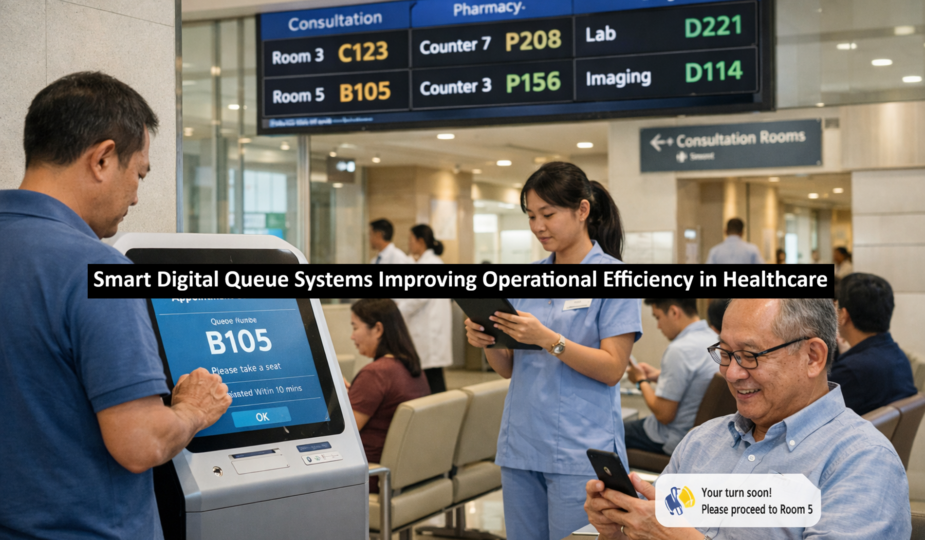
Digital queue management systems are a digital platform that assist with facilitating the smooth flow of patients from the point of registration through to the point of consultation and beyond.
Examples of the features you can expect from a digital queue management system in healthcare are:
- Kiosk and/or mobile app digital check-in
- Real-time queue updates
- Automated patient calling system
- Integration with hospital management systems
These solutions help patients to move seamlessly through all stages of their visit.
Advantages for Healthcare Providers in Singapore
Decreased Wait Times
Smart queue system healthcare makes waiting time less by balancing out the number of patients by department and communicating to the patient where they are in line so that there is less anxiety and thus less waiting time.
Better Use Of Resources
A healthcare queue management system enables administrators to monitor patient flow real-time, allowing them greater efficiency when allocating physicians, nursing staff and facilities.
Improved Patient Experience
Patients can avoid waiting in crowded places by receiving SMS alerts and mobile notifications. This provides patients with more comfort and overall satisfaction.
Increased Staff Productivity
Staff will spend more time caring for patients rather than doing administrative duties by automating routine jobs.
Areas to Utilize Queue Management Within Hospitals
Within a hospital, an organization can use a queue management system to manage customer flow at any of the following locations:
- Outpatient clinics
- Emergency department
- Pharmacies
- Diagnostic facilities
In Singapore, where rapid and accurate services are essential to maintaining an efficient healthcare system (especially during busy periods), these types of systems help facilitate effective operations.
Integration with Smart Healthcare Ecosystems
In addition to being part of Singapore’s national development plan, smart nation initiatives also have a strong connection to improving access to quality healthcare via technology.
A smart queue system can be integrated with a number of existing healthcare systems, including electronic medical records (EMRs), appointment scheduling software, and telemedicine platforms.
Integration allows providers and patients to receive a more consistent patient experience and increase efficiency, by eliminating timeliness barriers and enhancing efficiency between providers and patients.
Data-Driven Decision Making
Using data to make decisions through a digital queue management system is one of the key benefits for healthcare systems. The real-time access to data and analytics allows providers:
- Identify patient trends and peak hours
- Measure the efficiency of service
- Optimize staff scheduling
- Improve long-term staffing
These insights provide a means for maintaining operational excellence in Singapore’s competitive environment.
Infection Control and Safety
Since the end of the Pandemic, keeping healthcare facilities free from overcrowding is now top priority. With the use of a queue management system, physical queues can be minimized by allowing patients to check in without coming into the facility itself. Also, these systems allow patients to wait in a less crowded and safer area than where the healthcare facility is located:
This promotes a more effective way to have the Infection controlled and safer for both the patient and the staff working in the facility.
Challenges & Considerations
There are many clear advantages to implementing a hospital queue management system, although implementing the system requires extensive planning to accomplish this.
Some of the most critical considerations include:
- Integration with current systems
- Training for employees and buy in
- Data privacy and compliance
- Investing upfront to get started
These healthcare providers must meet guidelines from regulation as well as meeting patient expectations when using these types of systems.
Healthcare Queue Management Future
Smart Queue Systems for healthcare are a relatively new development that is growing in popularity every day thanks to many new technologies.
- AI and analytics to forecast patient flow into facilities
- Queue personalization & customization
- Voice & facial Recognition check-in
- Integrated wearable devices
Singapore continues to be a world leader in digital innovations; thus, adopting these technologies in Healthcare facilities will enable them to provide an efficient and patient-centered service.
Enhancing the Patient Journey
The patient journey is improved through smart queuing systems in integrated healthcare environments due to increased transparency for patients. Patients can see their current status on large digital displays and receive SMS notifications, significantly reducing “queue anxiety” because they understand how long they should wait before being seen.
In addition, reducing the amount of physical congestion in waiting rooms is critical to infection prevention in today’s post-pandemic world. By distributing the wait digitally, healthcare providers can create safer environments for sensitive patients and their medical staff.
Why You Should Choose Awebstar for Your Healthcare Queues
Awebstar is a reputable partner for healthcare providers looking to introduce a smart queue management system in Singapore. The smart queue solutions will assist in managing patient flow to reduce waiting periods experienced by patients and to avoid disrupting existing hospital operations.
The solutions Awebstar provides have the benefit of allowing for automatic notifications, digital check-in capabilities, and real-time tracking of patients in queues.
- Reduced patient wait times through instantaneous updates on queue status and virtual queuing
- Improved staff productivity through an automated scheduling system and the ability to manage queues with automation
- Ability to generate data insights to improve overall operational efficiency and lower congestion in public areas of hospitals and other healthcare facilities.
Final Thoughts
The development of “Healthcare 2030” by Singapore highlights the growing importance of digital infrastructure in delivering healthcare. The integration of Artificial Intelligence with current technology used for hospital queue management systems will enable increasingly personalized care pathways.
This is accomplished by allowing hospitals to prioritize patients needing urgent services according to their respective examination results. Efficiency in the delivery of healthcare entails more than just time; it means that every minute a healthcare worker has should be focused on patient care rather than handling non-value added tasks.
The acceptance of a digital queue management system by the hospital providers will help ensure that Singapore will continue to be a leader in global healthcare and operational excellence.
Author’s Bio:
Morris Edwards is a Senior Digital Strategist and UX Consultant at Awebstar Technologies Pte. Ltd., Singapore. He is a digital strategist and UX consultant with over 19 years of experience helping Singapore businesses build high-performing digital experiences.